

Inside the DCF870: disassembling the hydraulic impactor
Two impact drivers: the DCF860 and the DCF870. At first glance they appear nearly identical. Both drive screws. Both make loud noises when they need to push farsteners harder. Internally, however, they are very different machines.
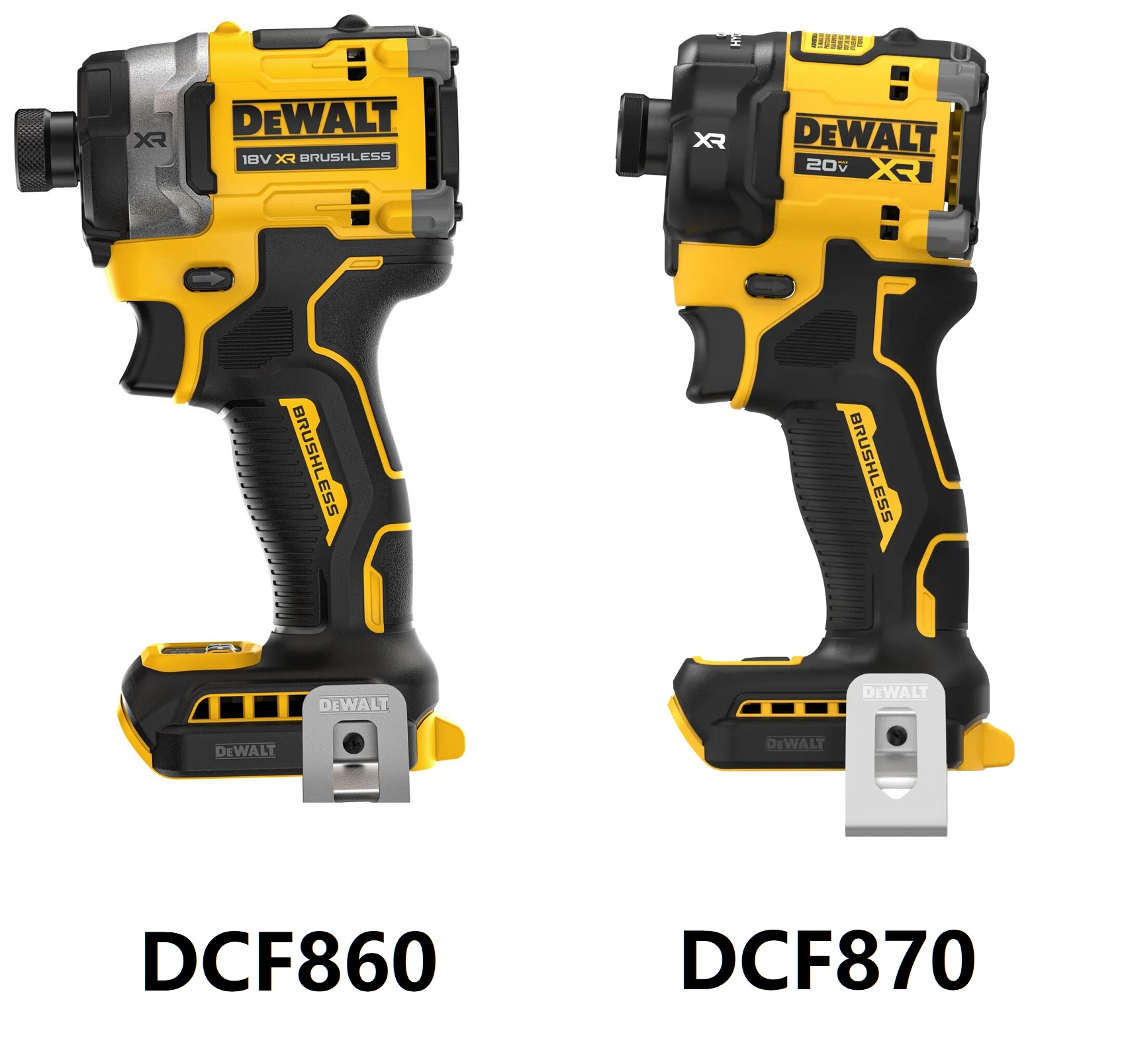
The DCF860 uses a conventional mechanical impact mechanism based on the familiar hammer-and-anvil design. The DCF870 takes a different approach based on oil-filled enclosure, using the near incompressibility of a liquid both to transfer torque and to soften the violent shock loads that normally accompany impact operation. The result is a driver that is noticeably quieter while still delivering substantial fastening torque.
Unlike the mechanical mechanism, however, the hydraulic impactor is supplied as a sealed assembly. Officially, it is not considered serviceable. Naturally, that means it had to be taken apart.
The traditional hammer-and-anvil mechanism
Before opening the hydraulic unit, it is worth reviewing how a conventional impact mechanism works.
A typical mechanical impact system consists of three major components:
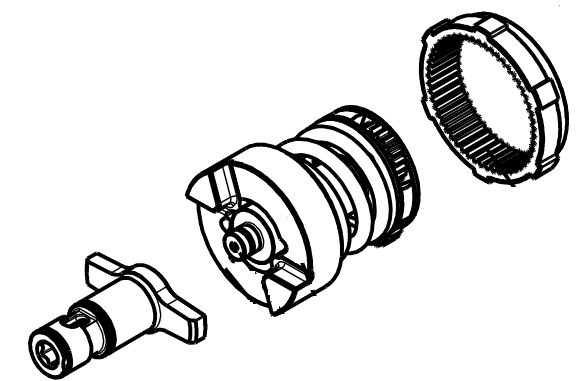
- stationary ring gear (to the right)
- hammer (center of the imasge)
- anvil (to the left)
The hammer is the large cylindrical component containing two drive teeth and matching slots for the anvil. During normal operation the hammer rotates together with the anvil. As resistance increases, such as when a screw becomes fully seated, the anvil slows or stops. The electric motor continues attempting to rotate the hammer. This causes the hammer to ride up its cam surfaces, compressing a spring.
Eventually the hammer disengages from the anvil and rotates past it. The spring then forces the hammer back into engagement, causing the hammer teeth to strike the anvil with considerable force. The impact transfers a burst of torque to the output shaft.
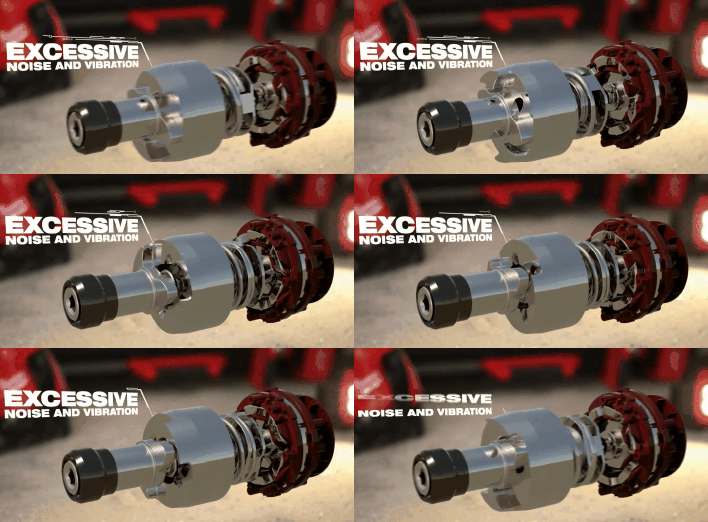
Animation by Milwaukee
This process repeats many times per second, which results as loud metal TRRRRR clunking sound.
Hydraulic impactor: same idea, softened with liquid
The hydraulic impactor still relies on the hammer-and-anvil principle. The difference is that part of the energy transfer takes place through a thin layer of oil contained within a sealed chamber.
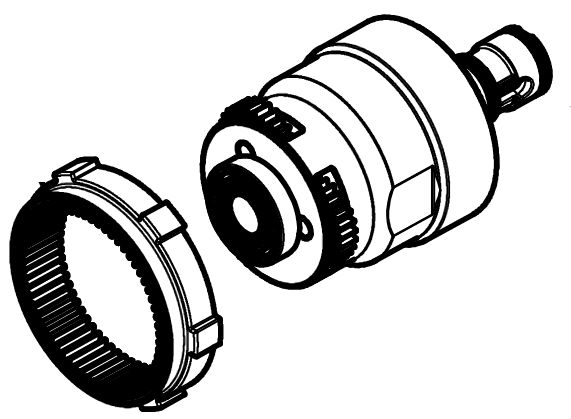
Instead of relying solely on a spring and a direct metal-to-metal impact, the mechanism uses an incompressible liquid as an intermediate element. As the hammer rotates, some of its energy is transmitted through the oil. The internal friction of the fluid dissipates a portion of this energy as heat.
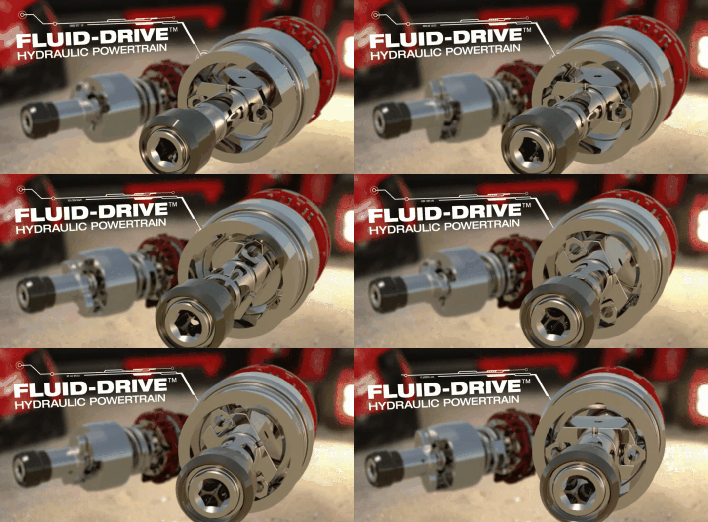
From a pure efficiency standpoint this sounds like a disadvantage. And it is: the specs of mechamical impact drivers show higher torque number than its hydraulic counterpart. However, the hydraulic impactors have reduced impact shock and dramatically lower noise levels.
Opening the hydraulic impactor
Disassembly begins by removing one half of the plastic housing. The next task is extracting the motor, switch assembly, and impact mechanism from the remaining half of the case. The motor came out with the impact mechanism still attached to its shaft. The ring gear and impact assembly followed shortly afterward. After some persuasion with a screwdriver, the impact mechanism finally surrendered and separated from the motor.
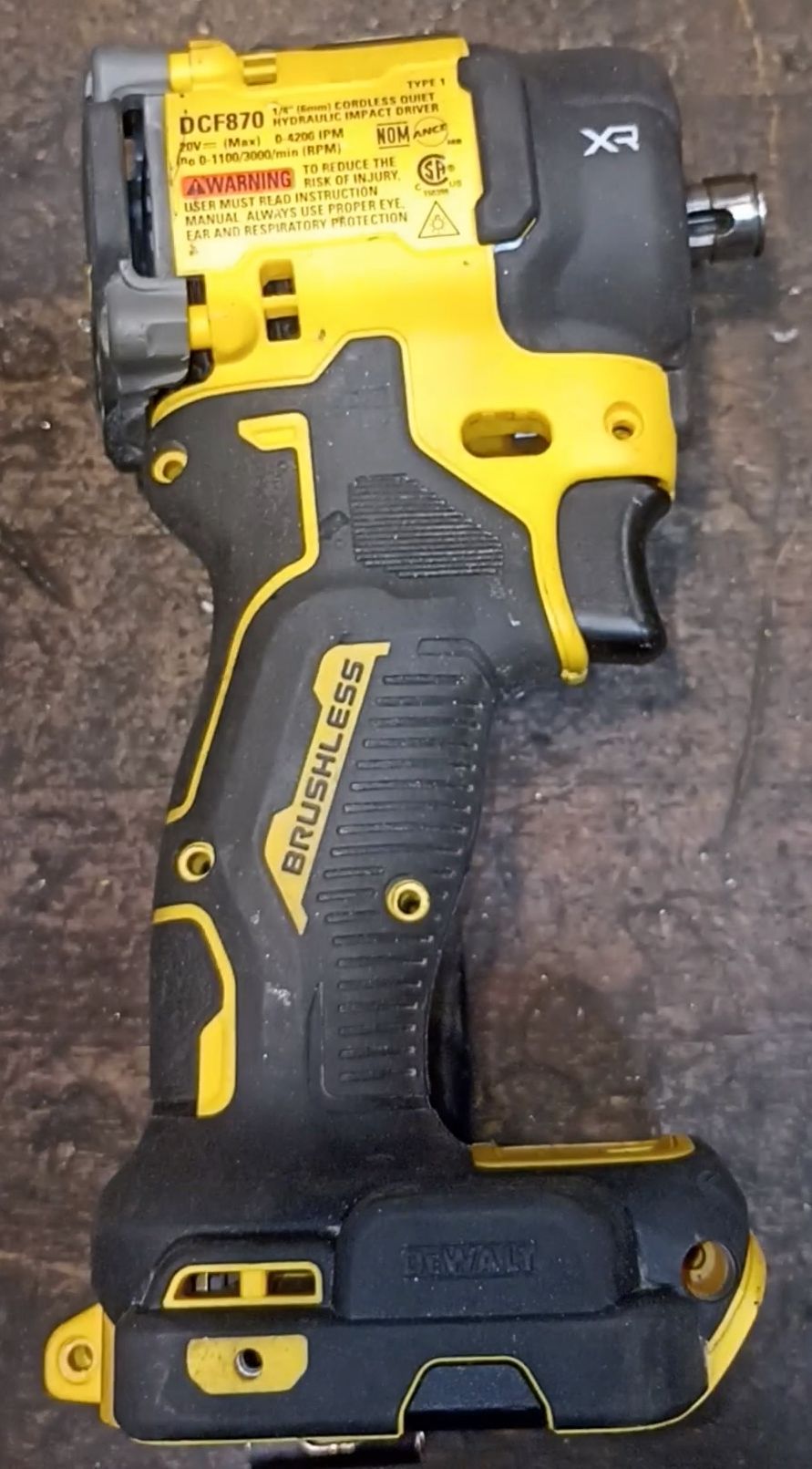
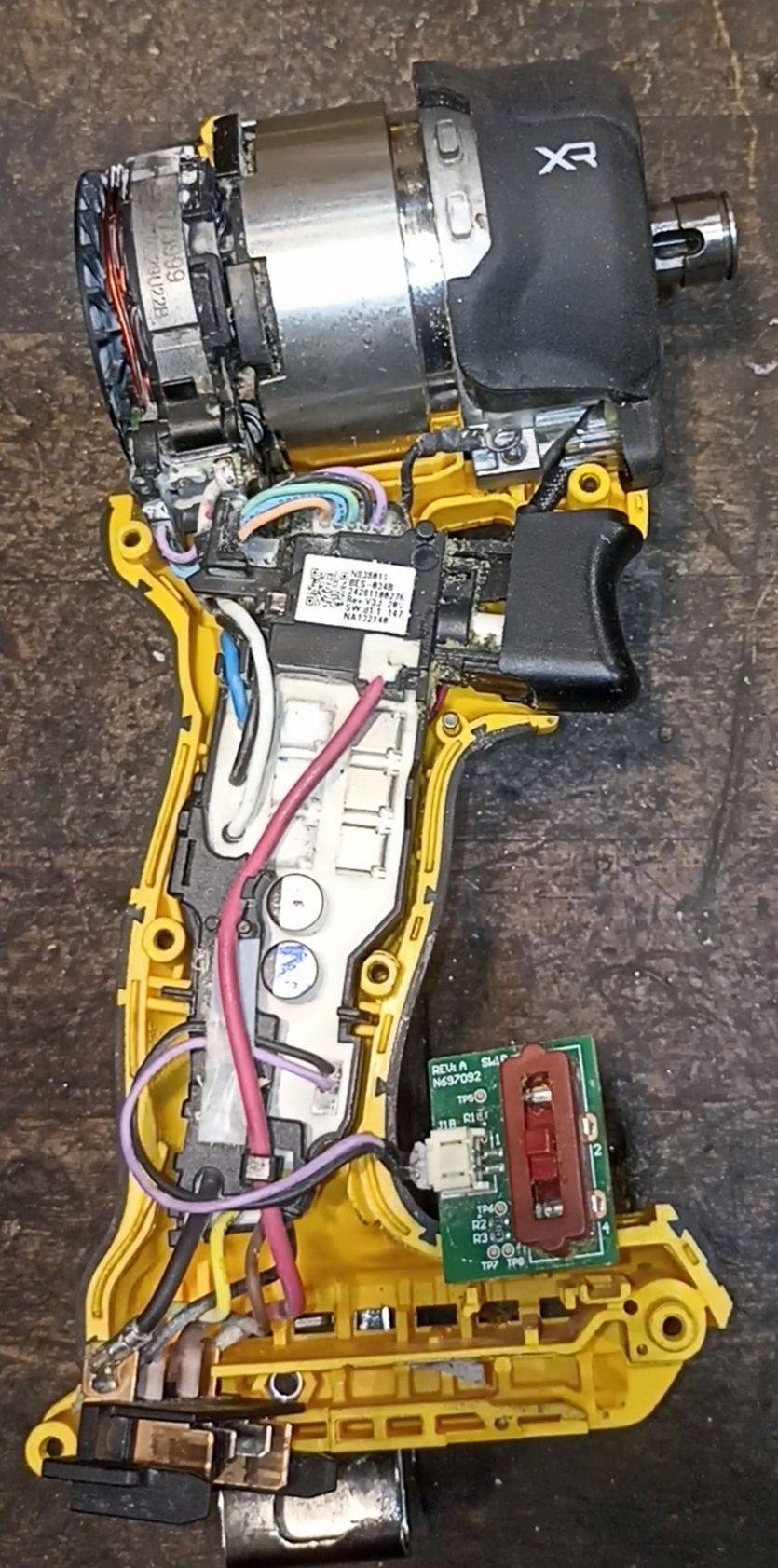
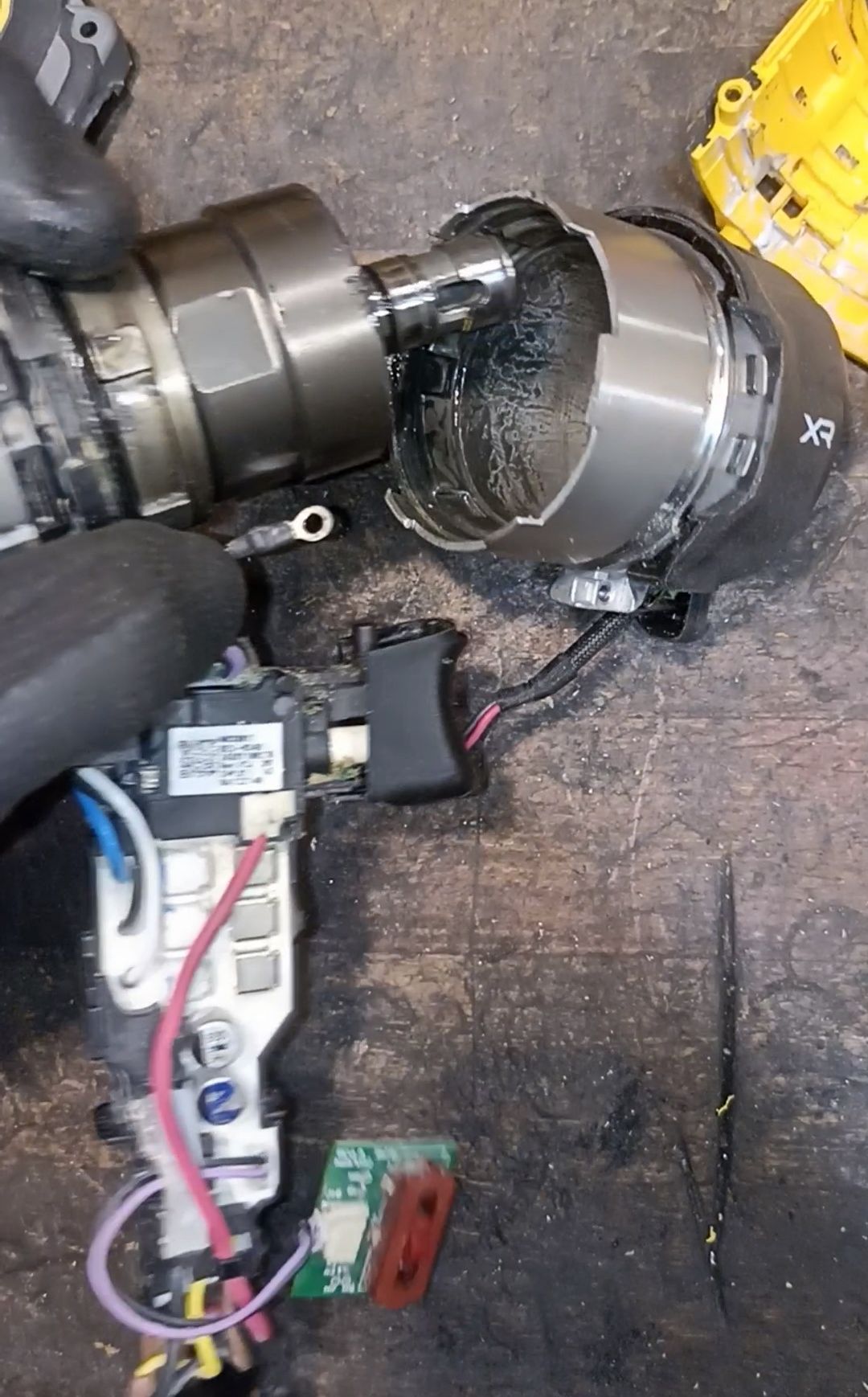
At its rear section the hydraulic impactor closely resembles the traditional mechanism. The ring gear is essentially identical. The planetary reduction gears are also familiar. Power from the electric motor reaches the impactor through the same general arrangement used in a conventional driver.
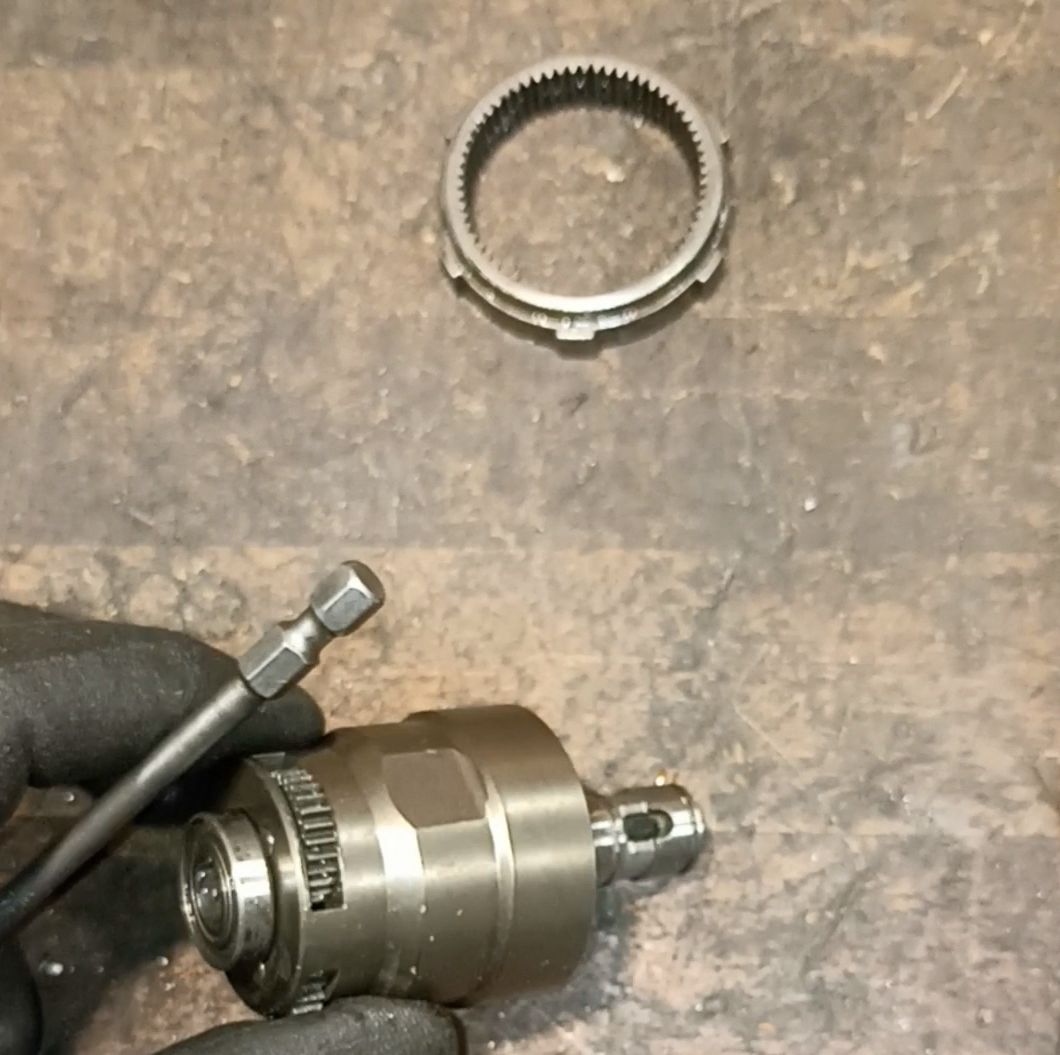
The real differences are hidden deeper inside the sealed assembly.
Disassembling the hydraulic unit requires a large wrench. The bit holder is threaded into the front of the assembly and forms a single piece with the retaining nut. Once removed, it exposes the internal housing of the hydraulic impactor.
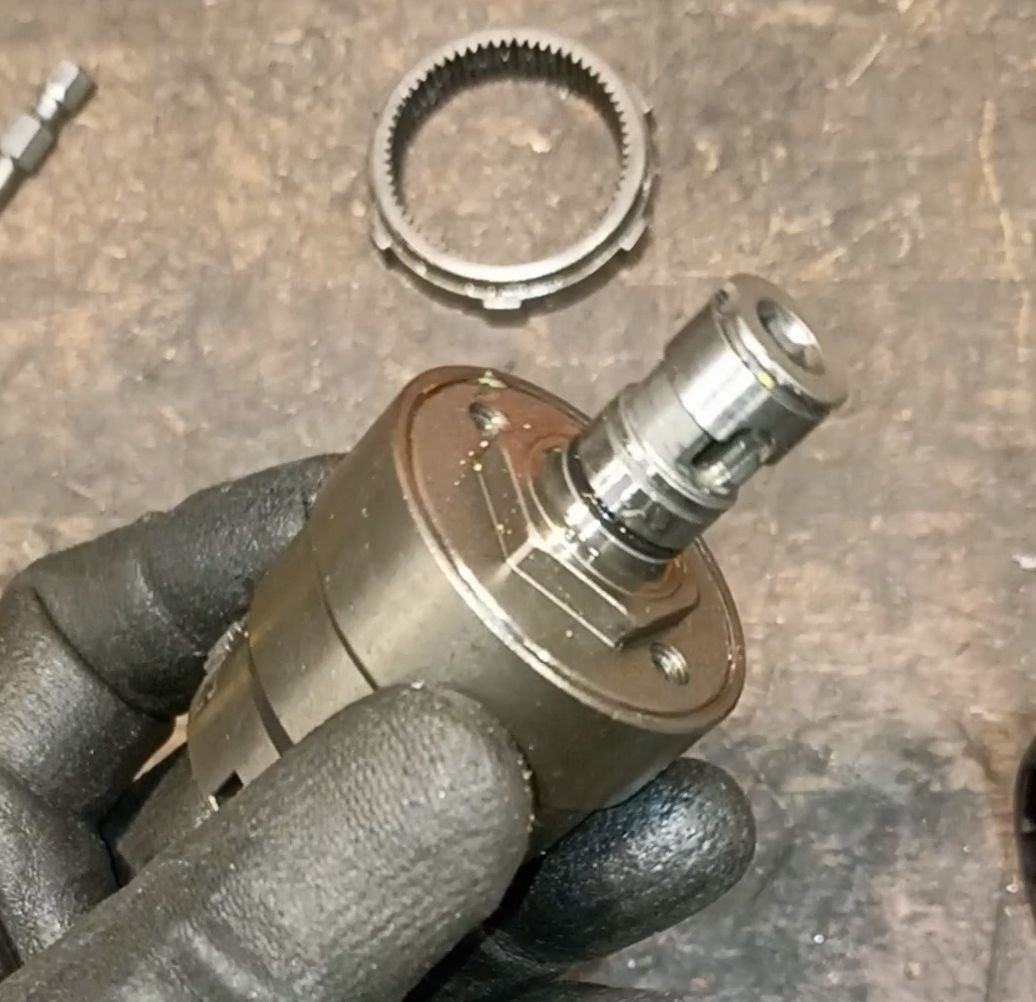
Contrary to what many people imagine, the mechanism contains surprisingly little oil. The total volume is only a few milliliters. Most of the internal space is occupied by moving components rather than fluid.
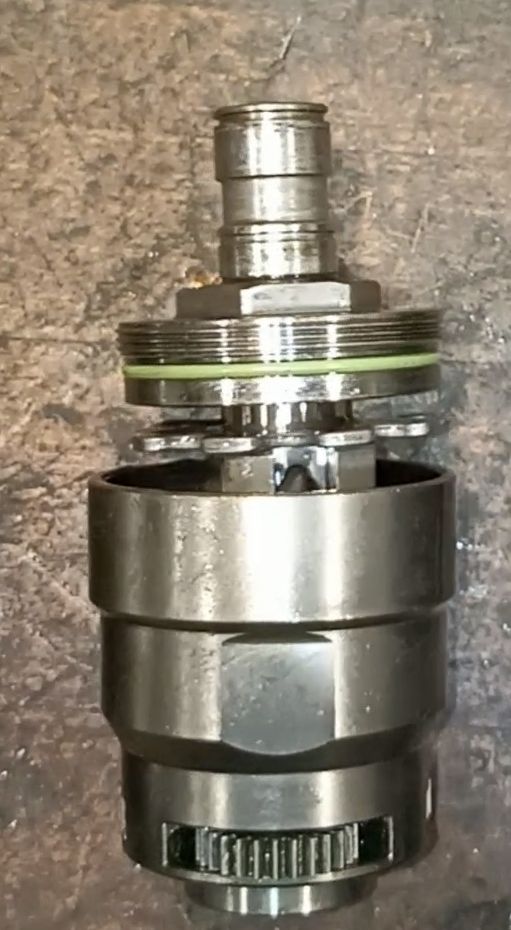
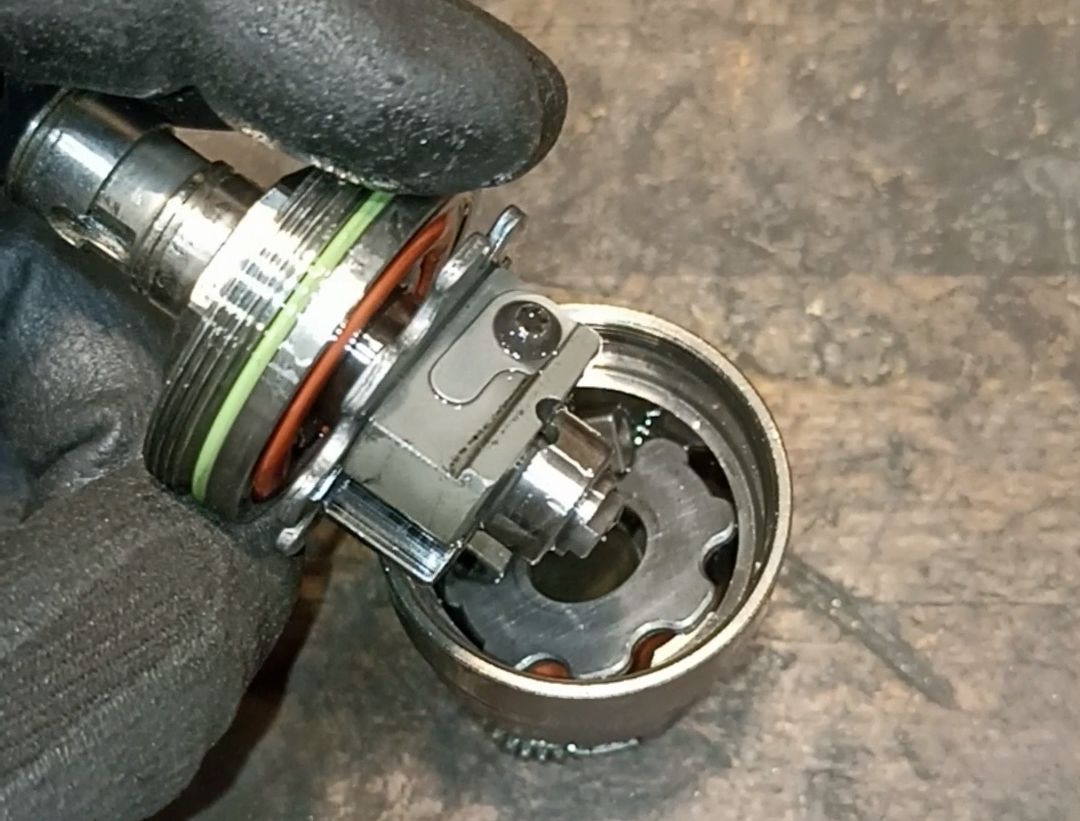
The oil itself is not pressurized. It appears to be an ordinary low-viscosity mineral or silicone-based fluid. Interestingly, the oil can be replenished without completely disassembling the impactor. Two small fill ports are located at the front of the assembly and are sealed with tiny screws. These screws possess a remarkable ability to disappear instantly upon removal.
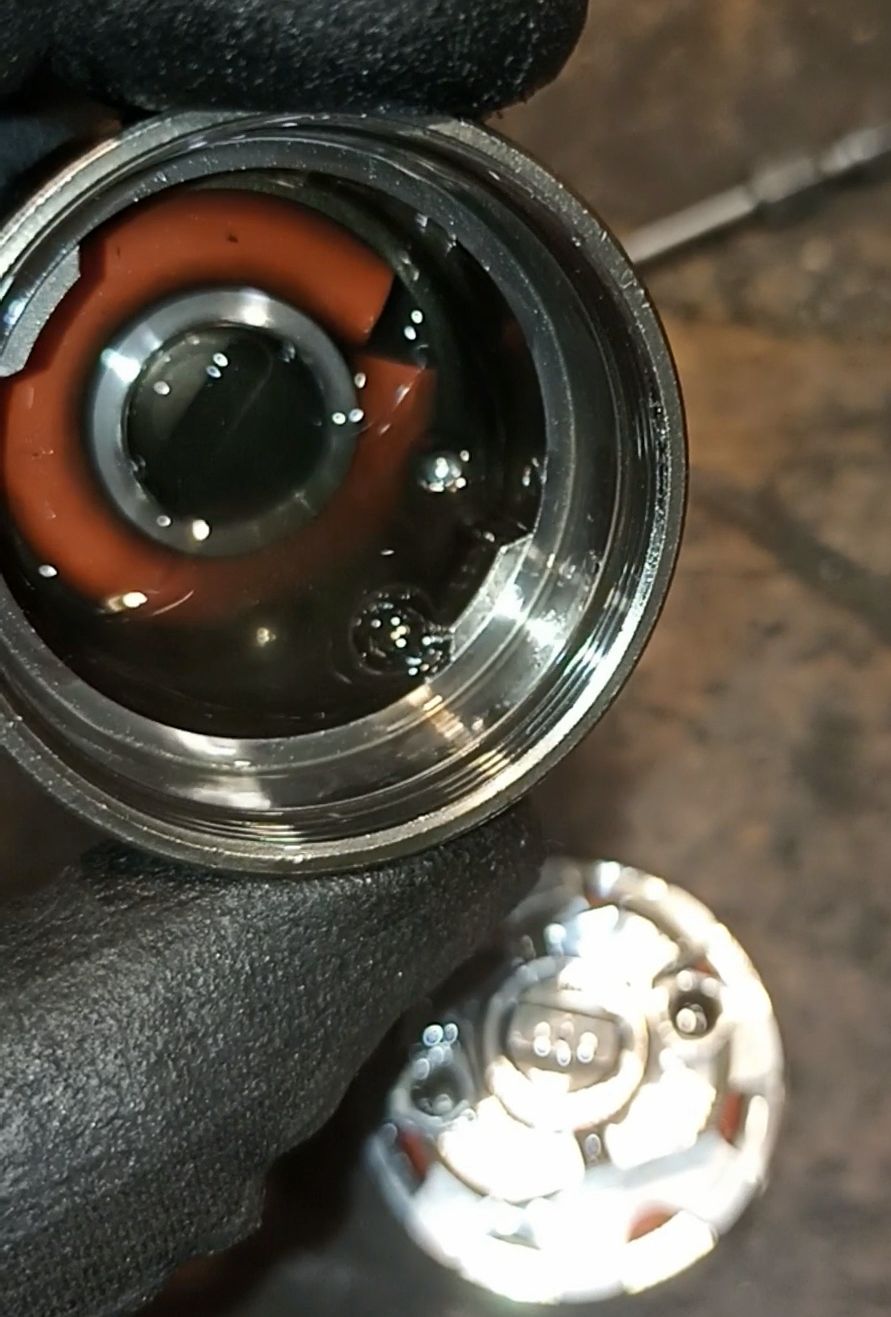
From a practical standpoint, the hydraulic impactor occupies an unusual position. The front cover and bit holder can be removed easily. Replacing them is mechanically straightforward. Unfortunately, these components are not offered as separate service parts.
In contrast, a conventional mechanical impact driver typically uses a separate bit holder that can be replaced independently if damaged.
This becomes particularly relevant when a broken screwdriver bit becomes wedged inside the holder. In many cases the bit holder itself becomes the only damaged component. With a traditional impact driver the repair is inexpensive and simple. With the hydraulic unit, the entire impactor assembly is generally replaced. It is considerably less satisfying when the failure originated from a broken fragment of hardened steel measuring only a few millimeters in length.
Final thoughts
Despite being marketed as a sealed, non-serviceable component, the hydraulic impactor turns out to be far less mysterious on the inside than its black-box appearance suggests. Once opened, it reveals a design that is surprisingly straightforward and cleverly engineered.
The DCF870 hydraulic impactor is not a radically different machine disguised as an impact driver. At its core it still relies on the same hammer-and-anvil concept that has powered impact tools for decades.
The innovation lies in how the energy is transferred. A small quantity of oil performs two jobs simultaneously. It transmits torque while damping the shock that would otherwise be delivered directly through the mechanism. The result is a quieter and smoother tool.