

How to deflate a swollen Lithium-Ion battery: easily make the smartphone flat again
Inflated lithium-ion batteries have become one of the most recognizable disasters of modern electronics. From just a cosmetic defect of a smartphone, powerbank or a laptop visual aesthetics to ripping and cracking apart of the gadget’s body.
Sometimes it's amazingly easy to inflate your device due to manufacturers’ desire to squeeze every joule of electrical energy from the battery and not implementing battery voltage limiting. The voltage level of a full charge speeds up degradation processes in the battery. Prolonged state of full charge, especially combined with a high room temperature, may cause this degradation in a matter of days. Pouched Li-ion batteries, which are used in smartphones, laptops and majority of powerbanks, have a soft shell, allowing a visual demonstration of this degradation in the form of swelling.
Exactly this has happened to an LG X Power 2 smartphone. It is a decade old device and its battery has survived all these years in a perfectly flat form. That’s because it was used daily and did not stay connected to a charger for long. But now this device is outdated for daily usage and one hot summer week it was forgotten about. It stayed connected to a charger for several days. When the phone was remembered about, its back cover developed an unpleasant bulge – that’s a swollen battery demonstrating it could not fit in its designated niche anymore.
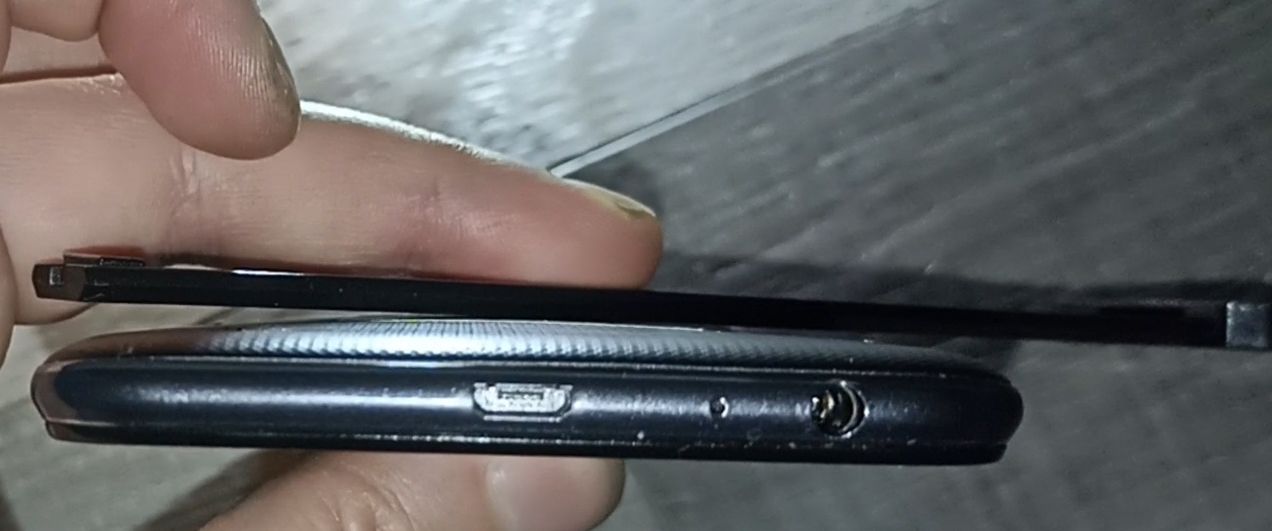
For this particular smartphone the level of swelling was purely cosmetic, yet it was already unpleasant to hold. In severe cases of swelling the display starts separating from the frame, the case elements crack.
Yet there is a simple method to fully remove the battery swelling or significantly decrease it. This method is based on gas solubility in liquid and requires only a freezer.
The LG X Power 2 was placed into the freezer compartment of an ordinary household refrigerator, which is typically -15 degrees Celsius.
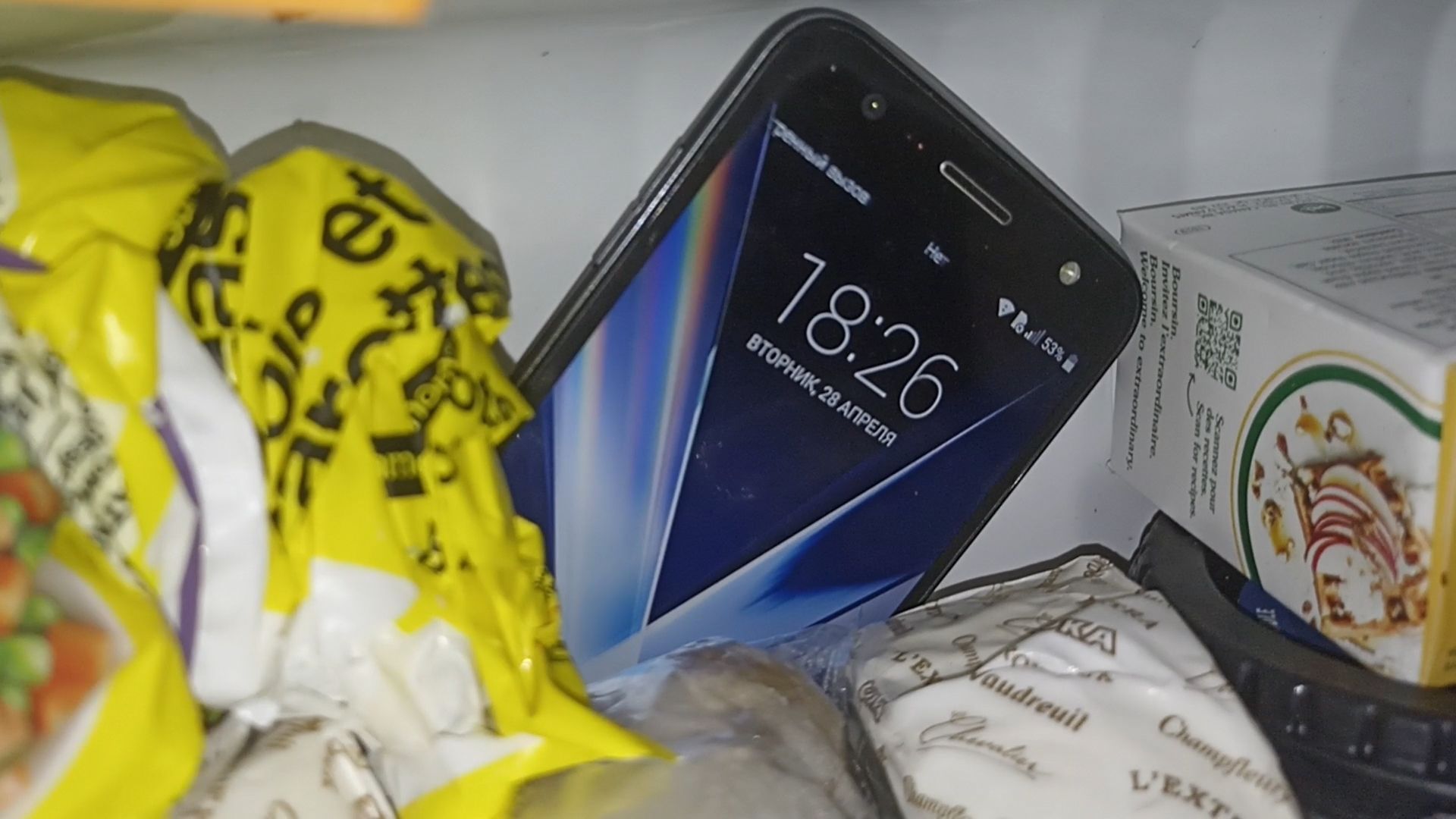
The phone remained there for slightly more than 24 hours because it was forgotten about. After removal from the freezer, the swollen shape had nearly disappeared. The plastic back cover became flat again. Several days later a minor bump returned, but the swelling was dramatically reduced and the phone had no constant tactile reminder of its swollen cosmetic defect.
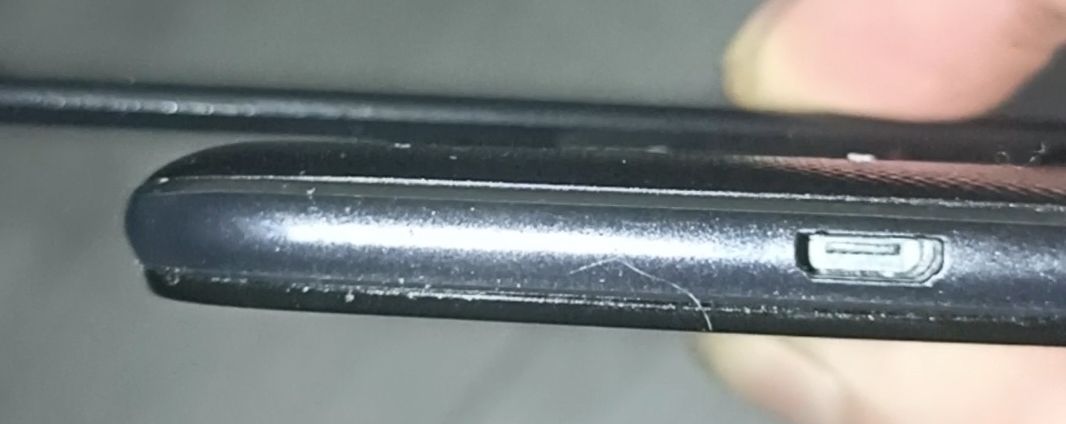
This sounds suspiciously like internet folklore. Yet the observed effect has a plausible physical and chemical explanation. The important detail is that the freezer did not “repair” the battery. It temporarily altered the balance of gases and materials inside the cell. Understanding why requires looking at how gases accumulate, and what low temperatures do to gases trapped inside a sealed battery pouch.
Why Lithium-ion batteries swell
Despite appearing to be a solid block, a lithium-ion battery is not a single solid block. Inside the battery there are two metal sheets and a plastic sheet, all soaked with electrolyte.
A copper sheet covered in a graphite-lithium mixture is typically a negative electrode. Aluminum sheet covered in a graphite-lithium mixture is a positive electrode. A plastic porous separator in between these sheets prevents direct electrical contact. Liquid electrolyte made of organic solution makes it easier for lithium ions to travel between electrodes, providing high current capabilities. These sheets in case of a cylindrical steel casing are rolled or they are folded if flexible laminated pouch packaging is used.
During charging and discharging, lithium ions shuttle back and forth between electrodes. Ideally this process occurs reversibly with minimal irreversible side effects. Real life is not perfect: heat, high charge voltage, aging, and chemical contamination slowly damage the electrolyte and electrode surfaces.
The electrolyte inside smartphone batteries usually contains organic carbonate solvents such as ethylene carbonate and dimethyl carbonate mixed with lithium salts. These liquids are chemically useful because they allow ion transport while surviving moderate voltages. Unfortunately they are not perfectly stable forever. At elevated temperatures and high states of charge they gradually decompose. Some decomposition products are gases.
Common gases generated inside aging lithium-ion cells include: carbon dioxide, Carbon monoxide, Hydrogen, Methane, Small hydrocarbon compounds.
Because smartphone pouch cells are hermetically sealed, the gases cannot escape under normal conditions. Gas accumulates internally and inflates the flexible pouch. Unlike cylindrical cells that use rigid metal cans, pouch cells visibly expand because their packaging allows this.
Heat dramatically accelerates these reactions, significantly speeding up electrolyte degradation. The exact chemistry inside batteries is far more complicated, but the general principle remains brutally simple: hotter batteries age faster.
The continuous charging at elevated ambient summer temperatures, heat generation from charging current and long-term high state of charge make a nearly ideal combination for gas generation inside the battery.
The swelling process is not merely cosmetic. Gas accumulation changes the mechanical structure inside the battery.
Electrode layers that were tightly compressed during manufacturing become separated slightly by gas bubbles. In severe cases gas pockets form between electrode layers, reducing effective contact area.
Not all generated gases exist as simple free-floating bubbles. Some interact with surrounding materials and can redistribute depending on temperature and pressure conditions.
Why the freezer reduced the battery swelling
The freezer treatment relies on the interconnection between gas solubility in liquid and temperature. Many gases become more soluble in liquids at lower temperatures. Carbon dioxide provides a familiar example: cold soda retains carbonation better than warm soda.
Inside the battery, some gaseous decomposition products may partially dissolve back into the electrolyte when battery is cooled below zero degrees Celsius.
Another plausible reason for the observed effect is adsorption into porous electrode structures. Battery electrodes contain extremely porous microscopic structures with enormous internal surface area. Graphite anodes especially contain layered carbon structures capable of adsorbing molecules.
At lower temperatures some volatile compounds may redistribute and adsorb more effectively onto internal surfaces. This does not eliminate degradation products but can reduce free internal gas volume.
The wording “the gas was absorbed back into battery material” is therefore not entirely wrong in practical terms, although the actual process involves complex equilibrium behavior rather than the battery somehow healing itself.
Once the battery warms again and experiences cycles of charging, some gases partially return, which may lead to some slight bump on the back cover reappearing.
It is important to repeat: the freezer treatment did not restore the battery to a state of a new battery. Capacity loss remained present. The battery and the phone simply reduced visible swelling.
Could this be used as a long term repair method?
A swollen lithium-ion battery should ideally be replaced because swelling indicates internal degradation. However, reality often diverges from ideal practice.
Many older phones are kept as backup devices, navigation units, music players, or secondary communication tools. Replacement batteries may be unavailable, low quality, counterfeit, or economically irrational compared with the value of the device itself.
In those practical situations, temporary reduction of swelling may restore usability long enough for continued operation. While keeping in mind that a battery that stopped visibly bulging after freezer exposure is still an aged battery.