

My Craftsman CMCE030B V20 shuts down every few seconds. How to increase the current limit of this rotary tool
The modification described below is an experimental modification performed on my own tool. It changes the factory current-protection threshold and is not approved by tool vendor. Anyone reproducing it does so at their own risk
A 0,5 cm of hair thin wire fixed the most irritating tool in the world, on my bench this title belonged to CRAFTSMAN CMCE030B V20 cordless rotary tool. There is so little wrong with the tool itself, and it is pleasant to use: it is compact, comfortable, the speed adjustment is useful, and the motor feels strong enough for bench tasks of cutting, grinding, sanding and carving.
The problem is that the tool does not let you do any of the aforementioned due to a particularly frustrating failure mode. The tool runs normally with no load, but shuts itself off as soon as even modest resistance on the arbor appears. This is a repeatedly reported issue, with owners describing online similar shutdown behaviour for years. Well, how could one not be irritated when the tool shuts itself off every several seconds. It’s a torture to work: you turn on the motor, barely touch the workpiece, and the motor shuts off. You press the button to make the motor spin again, try touching the workpiece, and tool dies again. Repeat the cycle several times to cause your patience to boil.
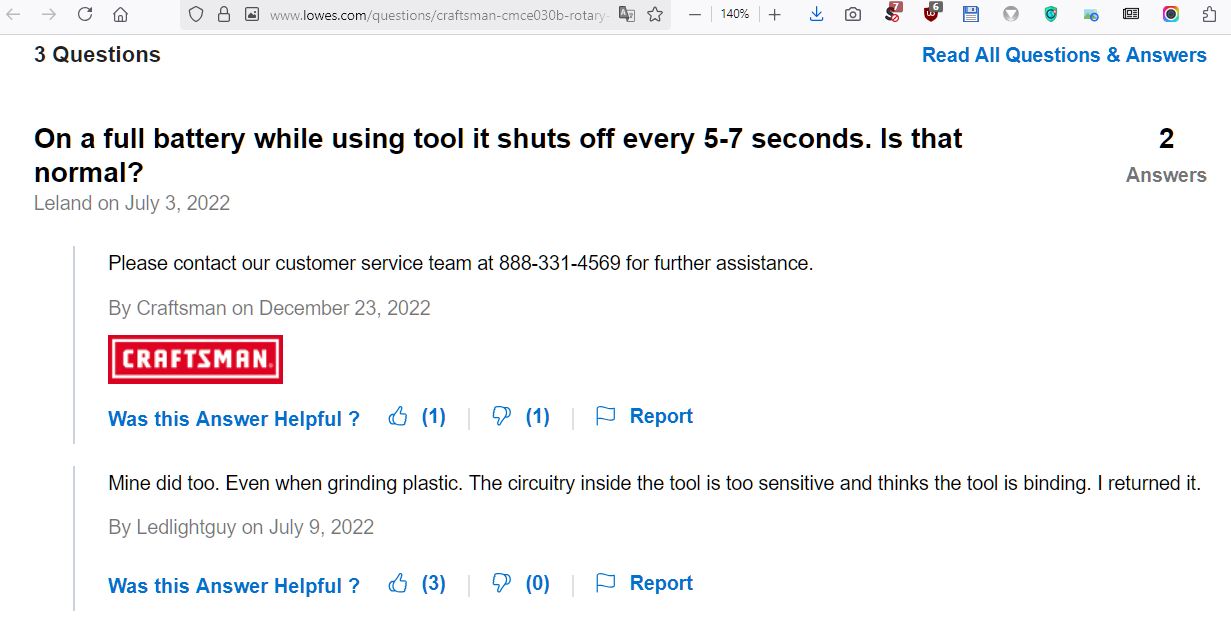



The price of this CRAFTSMAN's tool makes the problem even more irritating. It is not a bargain cheap piece of equipment. Not all CMCE030 seem to be affected – some users report they deliberately pushed the tool while grinding metal, and it neither bogged down nor shut off.
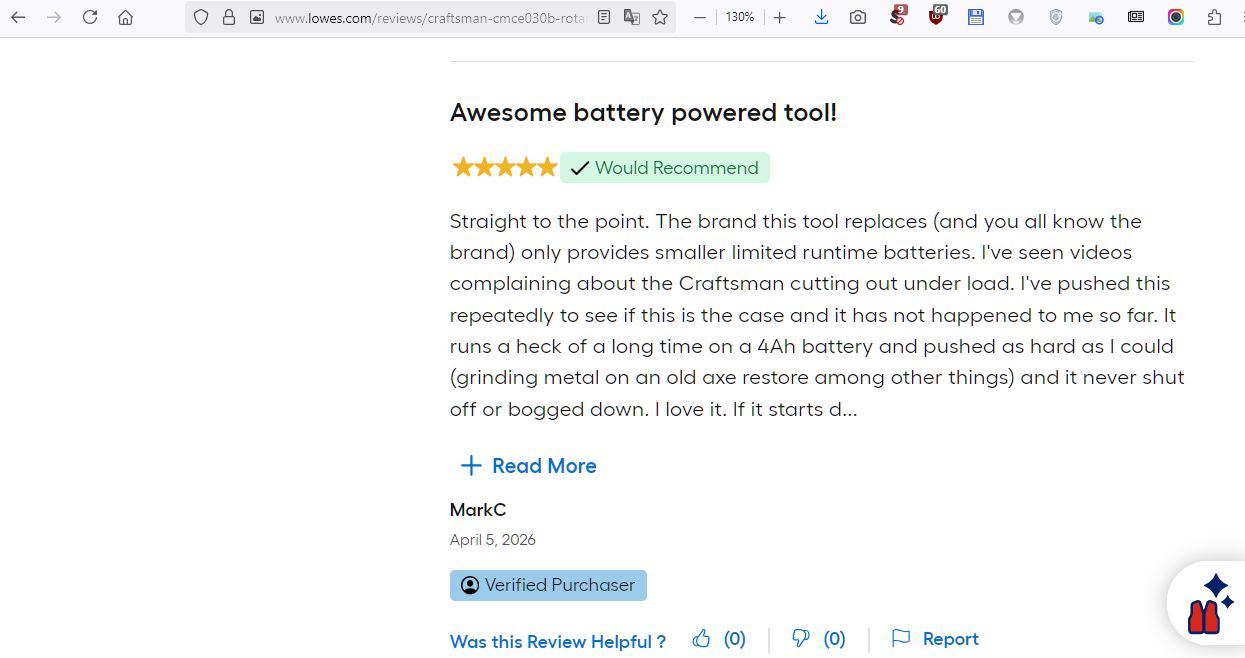
However, if your tool demonstrates a problematic behavior, it is remarkably easy to make it behave properly.
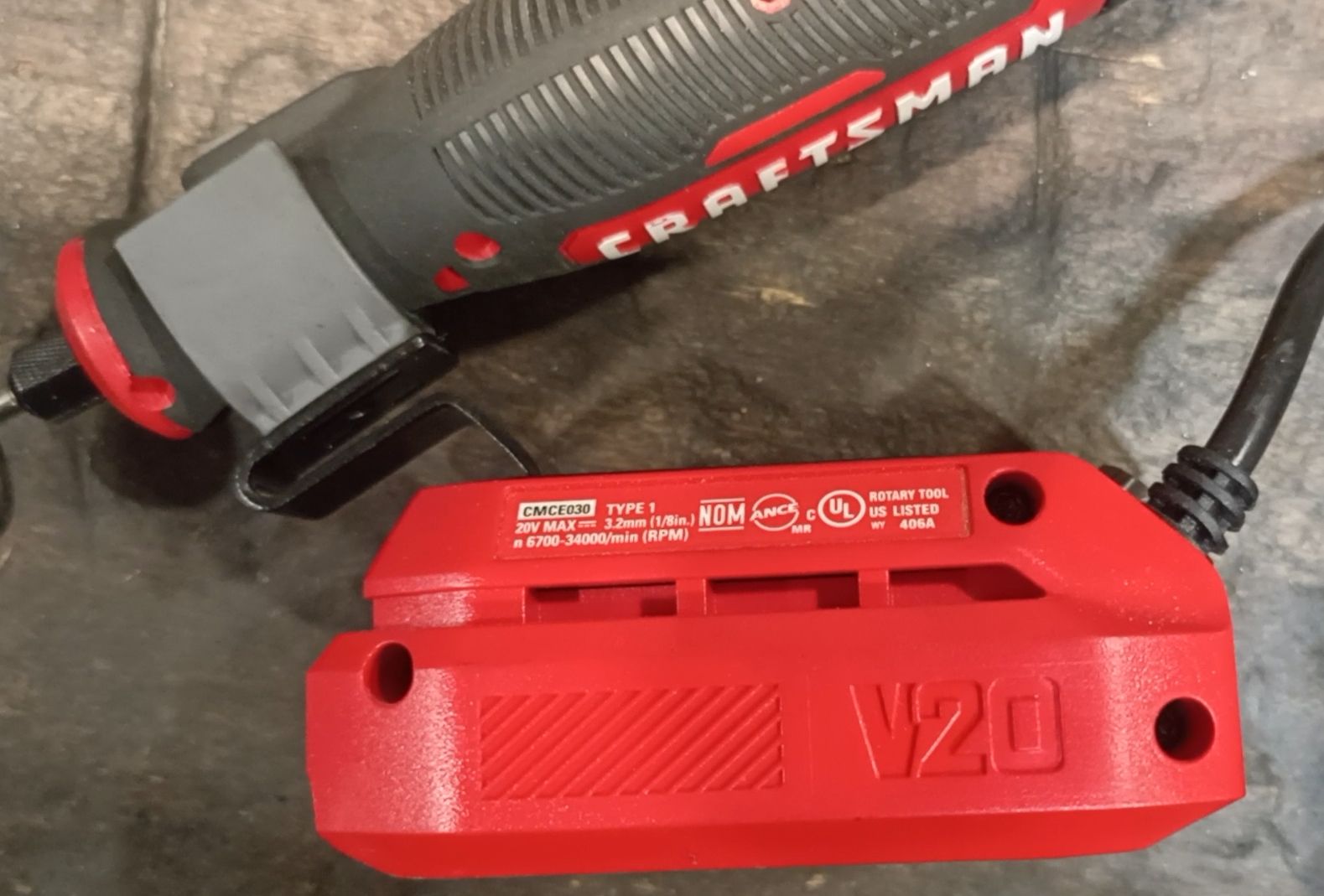
What CRAFTSMAN specifies
According to CRAFTSMAN, the CMCE030B V20 is a cordless rotary tool with a variable-speed range of 6700 to 34 000 RPM at no load. It uses five lithium-ion (3,6 V) elements connected in series, resulting in a 20 volt output (at full charge) battery marketed under V20 label.
Why the tool shuts down when pressure is applied
This is not a fully verified fact rather than mental model of the process happening. Any motor naturally draws energy as the mechanical load on its arbor increases (something is trying to stop the shaft from rotation). The electricity consumption is minimal when the tool’s motor freely spins in the air, and significantly increases at the moment the tool is pressed against the workpiece.
Pushing the tool harder into the workpiece increases the current draw further - it is how the motor produces additional torque to keep spinning. The increased mechanical load causes the motor to slow down, which can be visually observed and heard by user.
When the motor is loaded at its maximum but mechanical load keeps increasing, the motor just stalls. However, the high current keeps flowing across the motor’s windings. With no rotation of the shaft, there is no air movement for cooling, so the motor’s coils quickly overheat, enamel melts, and a highly unpleasant chemical smell emerges. The motor is now trashed, and has to be replaced.
This dramatic scenario occurs if there is no electronics that controls the current flowing into the motor. Such electronics fully shuts down the electricity supply for the motor long before the motor reaches its maximal current consumption. This helps to preserve the motor from destroying itself when user pushes too hard.
The official controller circuit and its current-limit threshold are unknown to the author. Based on the observed behaviour, the current limit appears to be at a level that allows relatively modest mechanical loads to trigger the protection.
Why it’s not the battery a problem
The similar symptoms of shutdown under load, while the motor is definitely not mechanically overloaded, can occur because of the electricity source (the battery) is incapable of supplying enough current while keeping the voltage level above its lower limit.
However, the battery does not appear to be the primary cause of this particular failure mode. A V20 battery can operate much more electrically demanding tools. Even a worn out degraded V20 battery may still have sufficient capability to power the relatively low-current hand held rotary tool, although battery condition should be verified when diagnosing an individual tool. Moreover, same shutdown behaviour has been reported by users who replaced batteries.
Modifying hardware shunt to increase the current limit
If the root cause is the motor controller’s low current limit, then increasing the permitted current would theoretically prevent the tool from shutting down every several seconds even under light load.
Increasing the limit changes the protection boundary. It does not transform the CMCE030B into a substantially more powerful rotary tool.
How to disassemble the CMCE030
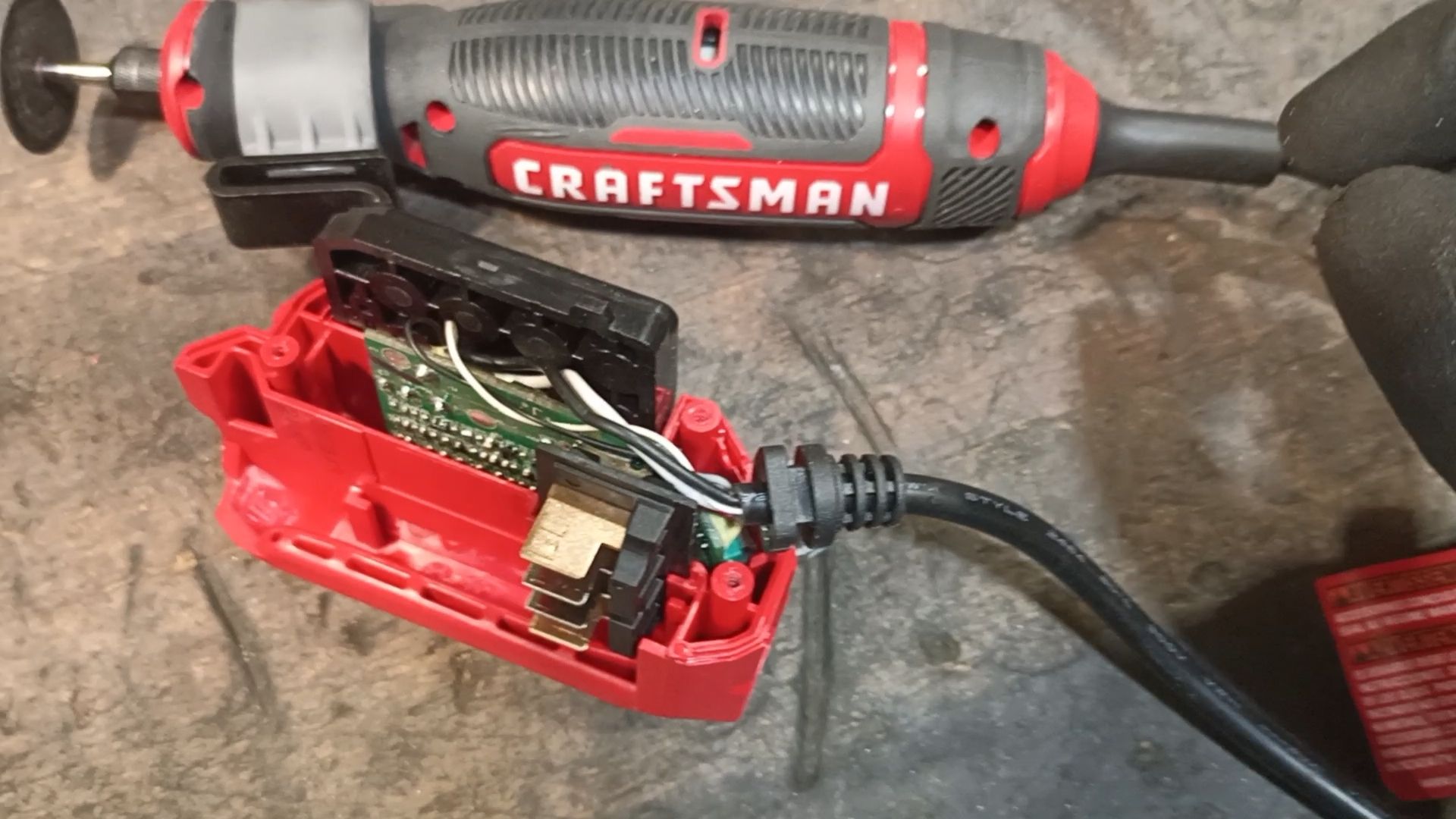
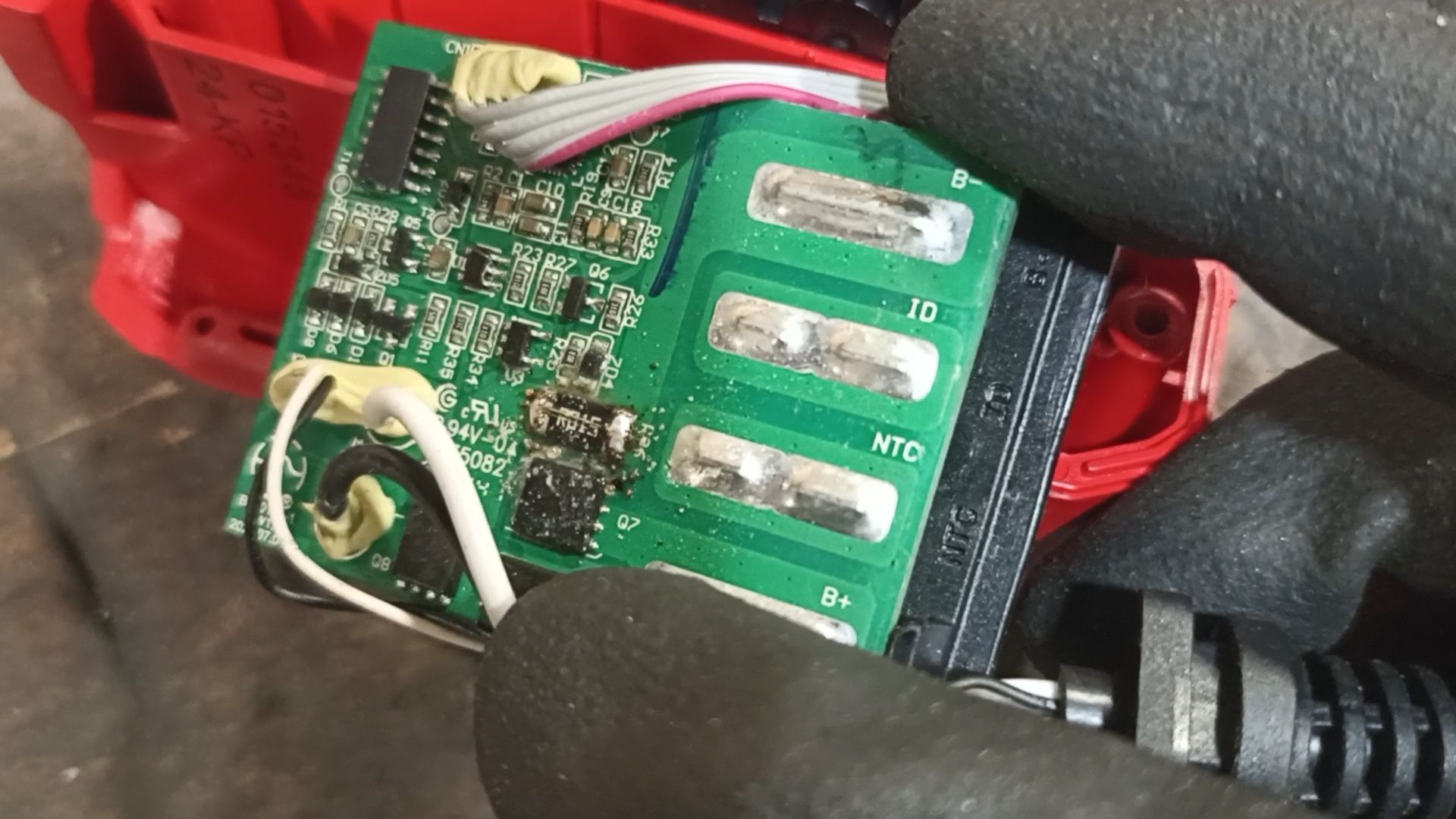
The current sensing shunt and all other electronics are located inside the tool’s base shoe. To disassemble it first remove two stickers. One sticker on the bottom of the base, and another sticker below the speed regulator.
Use a T10 screwdriver bit and remove three screws. The two pieces of the base shoe casing are now free to be separated. Carefully pull the pieces in opposite directions to get the electronics out. Watch out and keep wires intact.
Increase the current limit
The CMCE 030 uses a low resistance resistor as a current sensing shunt. You can easily spot it as this is the biggest resistor on the board, and it is located near the minus battery terminal.
The shunt is marked as R015, which means the resistance value is 0,015 Ohm.
The modification below changes the current-sensing threshold rather than repairing the original protection system. It therefore modifies manufacturer's values and should be treated as an experimental modification, not as an approved repair.
While we cannot modify the tool’s firmware to increase the current limit, we can lie to the controller and make it think the current is lower than it actually is. To increase the current limit, simply replace the shunt with the resistor of much lower resistance. Alternatively, keep the shunt and add in parallel to it another low resistance resistor. A piece of wire is a perfect example of a low Ohm resistor.
Wrapping up
The CMCE030B's repeated shutdown under light load is a problem reported through years by several owners. The reports include cases where users tried different batteries and replacement tools but that did not resolve the behavior. At the same time, some owners report completely satisfactory operation, demonstrating that the symptom is not universal.
The available evidence points toward a narrow load margin in the motor’s electronic control system. Therefore, an easy way to increase the current limit of the CMCE030 is a modification the current-sense circuitry.
this particular case no measurements were conducted, and just a piece of wire was slapped above the shunt. Currently, the tool stopped shutting down after a few seconds of touching the workpiece. It the new current limit will still be too low for a convenient tool use, another piece of wire may be added.